A Masterpiece of Sacred Architecture
Labyrinths are frequently found in or near ancient churches dating back to the 12th century. During the Gothic period and the Middle Ages, floor labyrinths were installed in many cathedrals across France. The most famous of these is the pavement labyrinth of Chartres Cathedral. With a diameter of 12.5 meters and a path length of 261.5 meters, this pattern is often referred to as the Christian Labyrinth.
A Substitute for Pilgrimage The labyrinth in Chartres is a significant symbol of Catholic spirituality. Historically, it represented the believer's spiritual path and was often used as a substitute for a pilgrimage to Jerusalem. Believers walked the labyrinth in a meditative practice to do penance and focus on their spiritual journey. For church visitors, these floor labyrinths were an invitation to turn inward. Walking the winding path mindfully brings calm and reflection. In the past, people even crawled the path on their knees in prayer. This "mini-pilgrimage" to the central rosette takes about 10 minutes. Many view it as a form of walking meditation that has a soothing and healing effect. Interestingly, historically, people even danced over the labyrinths on Easter Sunday until the church eventually found the movement disruptive and removed or covered some of them.
The Mystery of the Numbers How many teeth does the labyrinth have? Surrounding the Chartres labyrinth are teeth, spikes, or "lunations." If you count carefully, there are 113 teeth. If the circle were closed, there would be 114, but the entrance creates an opening. Counting the "negative space" between the spikes (which resembles a half-moon), there are 114 lunations. In the center of the labyrinth is a rosette made of 6 round petals. If you divide 114 by 6, you get the number 19.
-
The Metonic Cycle: Every 19 years, the same moon phase returns on the same day of the year.
-
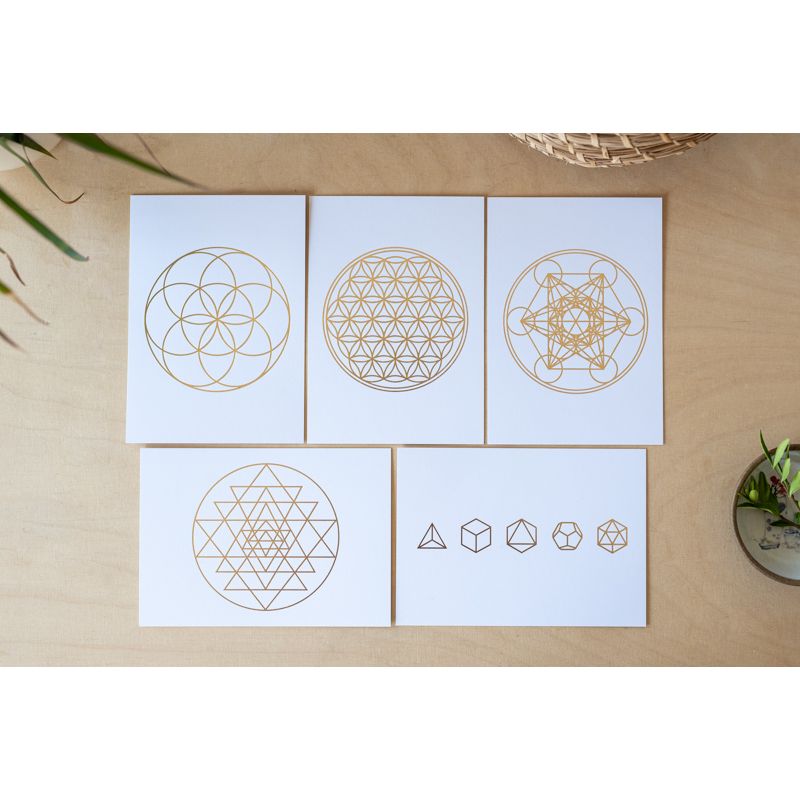
Symbolism: The number 19 often stands for perfection, wholeness, and the union of Body, Mind, and Soul. It connects to the sun, divine light, and the highest spiritual plane. Since the winding path runs both clockwise (sun) and counter-clockwise (moon), it symbolizes the course of the celestial bodies. Fascinatingly, the Chartres labyrinth is roughly aligned with the Summer Solstice. Even the Flower of Life consists of 19 circles, reinforcing the theme of perfection. Perhaps this mystical labyrinth was also intended as a solar calendar.
Global Origins While the Church adapted the symbol, labyrinths are found all over the world. In Scandinavia, there are labyrinth wall paintings in old churches; in England, they appear as turf mazes. The Cretan Labyrinth is considered the archetypal form. The symbol was popular among Greeks and Romans, with the oldest examples found on pottery shards in Syria (approx. 2000 BC) or carved into rocks.
Labyrinth vs. Maze A labyrinth is not a maze. A maze has crossroads, dead ends, and wrong turns. In a labyrinth, there is only one path that leads inevitably to the center. Once you reach the center, you follow the same path back out. Therefore, labyrinths stand for inner work, the cycle of becoming and passing away (resurrection in the Christian faith), and the path through life with all its twists, turns, and insights.
Meaning & Application This wall decal reminds you to engage with the labyrinth of life, to trust it, and to keep moving forward. All the twists and turns make you wiser and ultimately lead to your goal and enlightenment. Use this spiritual wall decor for Meditation, Mindfulness, and Self-Reflection. As a wall sticker, the symbol can serve as a Finger Labyrinth: tracing the lines with your finger can increase concentration and synchronize the two hemispheres of your brain.